
A holistic support program focused on understanding the connection between digestion, nutrition, gut comfort, mood, sleep, focus, behavior and Autism or ADHD-related challenges.
We help families understand how digestion, food, sleep and gut comfort may influence focus, mood, behavior and emotional regulation.
Gut & Brain Health focuses on how digestion, nutrition, gut comfort, sleep and body balance may affect a child’s mood, attention, behavior, sensory response and emotional regulation.
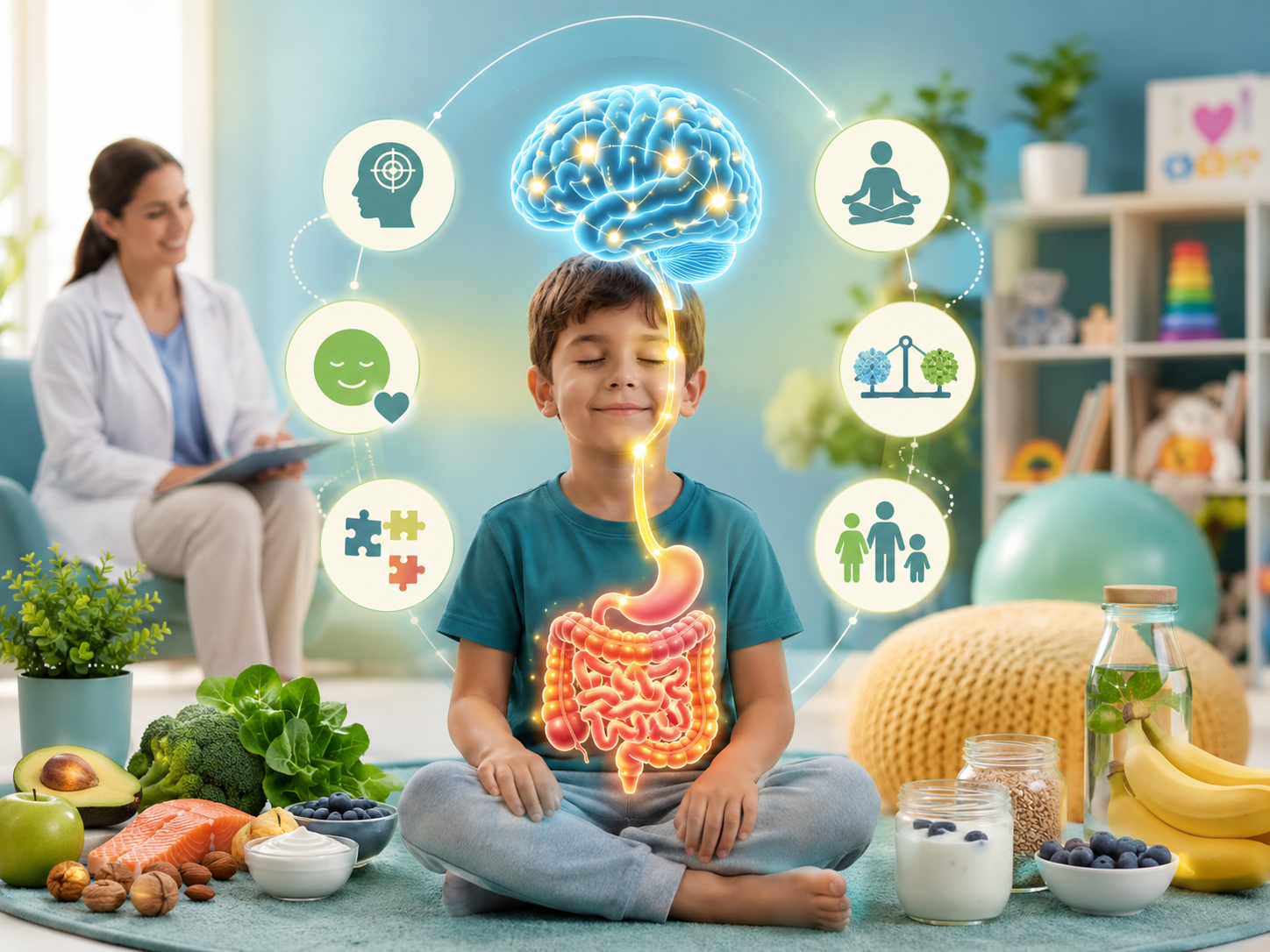
Supporting digestion, nutrition, sleep and behavior together through a holistic approach.
The gut and brain are closely connected. When a child has digestive discomfort, constipation, bloating, reflux, picky eating or food sensitivity, it may affect comfort, sleep, mood, attention and behavior. This support program helps parents observe these patterns and take practical steps.
Behavior is not always just behavior. Sometimes the child may be uncomfortable, overstimulated, hungry, constipated, tired or unable to communicate body discomfort.
Many children with Autism, ADHD or sensory differences may also show gut-related symptoms. These signs can affect daily comfort, focus, mood and routine.
Difficulty passing stool, infrequent bowel movements or discomfort during toilet routine.
Abdominal swelling, heaviness, gas, stomach tightness or repeated discomfort after food.
Burning sensation, sour taste, burping, nausea or discomfort after meals.
Strong food preferences, limited diet, texture issues or refusal to try new foods.
Irritability, restlessness, crying, meltdowns or frustration linked with body discomfort.
Poor sleep, night waking, difficulty calming down or discomfort during bedtime.
Sometimes a child’s behavior changes because they are unable to express physical discomfort. Understanding the difference helps parents respond better.
Digestive discomfort can show up through behavior, sleep issues, irritability or food refusal.
When the body is uncomfortable, the brain may struggle more with focus, calmness and cooperation.
If parents only see behavior, they may miss body discomfort. Gut & Brain Health Support helps families observe digestion, food, sleep and behavior patterns together.
Gut-brain support can help parents understand patterns that may affect the child’s comfort, learning, mood, sleep and daily behavior.
Parents learn how food quality, limited diet and nutrient gaps may affect energy and regulation.
Support focuses on constipation, bloating, gas, reflux and food-related discomfort patterns.
Body comfort and digestion may influence sleep, irritability, restlessness and emotional response.
When the body feels better, some children may show better calmness, attention and cooperation.
The gut communicates with the brain through many pathways. Food, digestion, sleep and stress can all influence how a child feels, reacts, focuses and behaves.
Parents learn to track body comfort and daily patterns instead of only reacting to behavior. This helps families understand whether certain foods, constipation, poor sleep or overstimulation may be affecting the child.
Observe whether certain foods affect mood, energy, sleep or digestion.
Track constipation, loose stools, irregular timing and discomfort.
Notice links between gut discomfort, meltdowns, focus and sleep.

Food, digestion, sleep, sensory load and behavior are observed together.
We guide families step-by-step to understand the child’s digestion, nutrition, sleep and behavior patterns.
We understand food habits, stool routine, sleep, mood, behavior and daily comfort concerns.
We review possible links between digestion, nutrition, sensory load, focus and emotional regulation.
Parents receive practical food, routine, hydration, sleep and observation-based suggestions.
We review progress and help families adjust steps based on comfort, behavior and routine changes.
This support program helps parents understand and improve daily patterns related to digestion, food, sleep, mood and behavior.
Understanding picky eating, limited diet, texture sensitivity and strong food preferences.
Guidance to observe constipation, loose stools, irregular bowel habits and discomfort patterns.
Practical support around balanced food choices, nutrient awareness and family-friendly meals.
Understanding how sleep, bedtime routine and body comfort may affect next-day behavior.
Tracking links between food, digestion, irritability, focus, meltdowns and emotional response.
Simple home-based strategies that parents can follow without stress or confusion.
Gut & Brain Health Support helps families observe the child’s body signals and create a more comfortable, calmer and supportive daily routine.

Parents learn to support digestion, food routine, sleep and emotional regulation.
Parents learn how to connect food, gut comfort, sleep and behavior patterns in daily life. The goal is to support the child gently and practically.
If your child has repeated digestive concerns along with behavior, focus, sleep or food challenges, gut-brain support can help you understand the pattern.
These signs may indicate that digestion, food, sleep or body comfort needs closer observation along with behavioral support.